Wednesday, March 23, 2016

San Juan Special

     Mofongo is uniquely Puerto Rican.  It is an integral part of the culture and national identity and is the unofficial national dish.  Crisp on the outside and dense on the inside it is made by mashing green unripe plantains with salt and water in a pilon, a wooden mortar and pestle, until it comes together and forms a spherical shape.


     The resulting tight ball of mashed plantains is then dressed with any number of sauces and condiments.  It is traditionally served with fried meats but variations include vegetables, shrimp, even octopus, all swimming in a broth laced with garlic and olive oil.


     Mofongo, while being Spanish in origin, has an African influence.  The slave trade brought with it food prepared by those transported across the Atlantic.  The culinary ancestor of mofongo is fufu, a common meal made from bananas or casava.  There can also be Creole flavors as well when mofongo is served with spices, sweet peppers, tomatoes and onions.

     First appearing in cook books as far back as 1849 there are still differing opinions as to what ingredients should be included in mofongo and no two dishes of it look or taste the same.  It can be served as a side dish or as an entree as I was served, topped with chicken.  Mofongo is to Puerto Rico what poutine is to Quebec or the po'boy is to New Orleans.  It is what you make it.  And it's all good.

mofongo-camarones_1.bmp (588×588)

Tuesday, March 22, 2016

Old San Juan

     One of our ports of call during my Caribbean culinary research cruise was San Juan on the island of Puerto Rico.  Founded in 1521 by Spanish colonists it is the 2nd oldest European established capital city in the Americas, second only to Santo Domingo on the neighboring island of Hispaniola.   The iconic garitas or sentry boxes of El Morro (officially El Castillo de San Felipe del Morro) have become symbolic of the historic city.


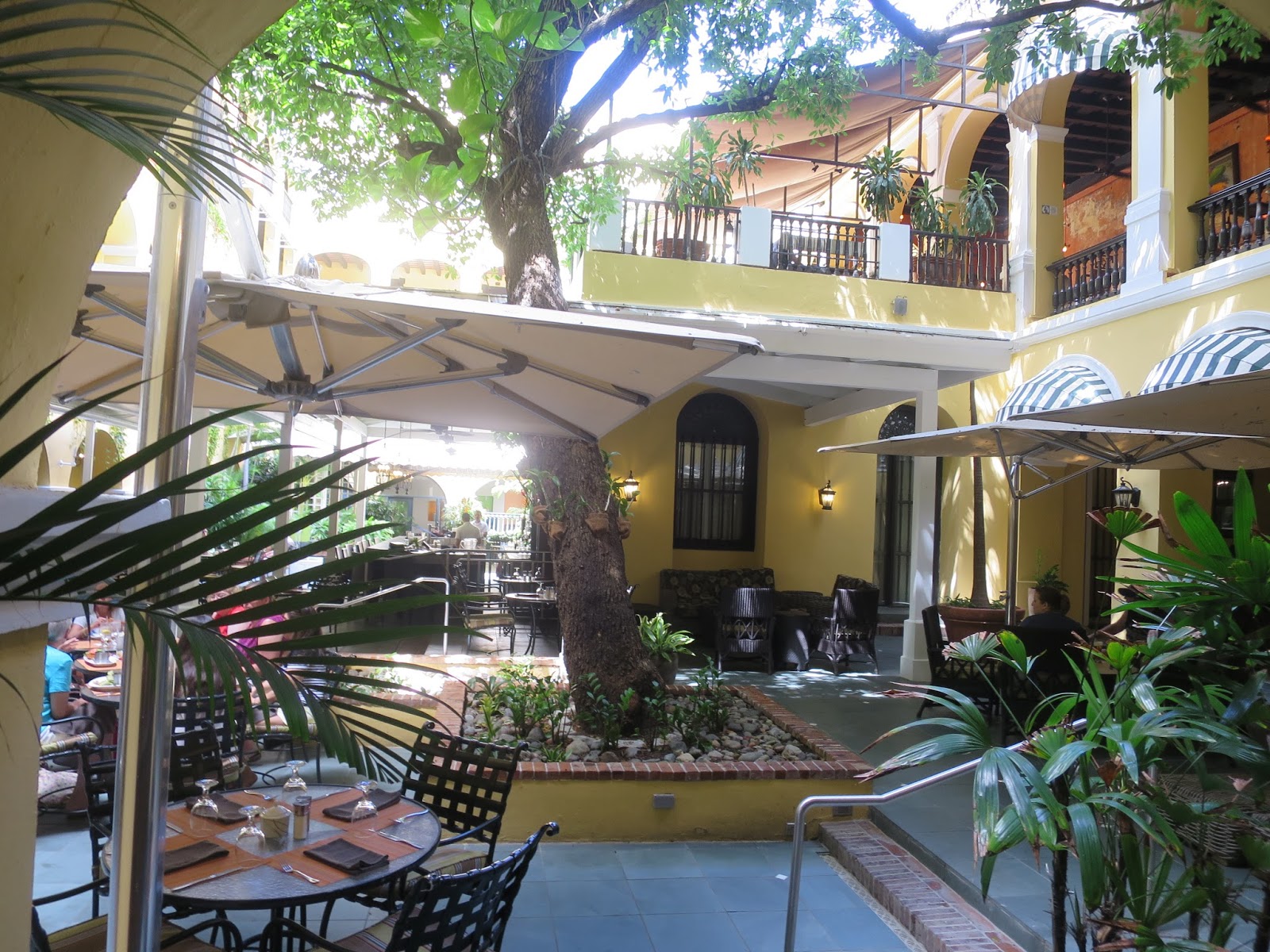
     After a customized bus tour of the city I was on my own to explore and to see the town for myself.  Some of the streets there are still paved with the original blue cobblestones placed there by the original settlers.  I was beginning to get hungry and so began to look for a place to sit down for lunch with my culinary compatriot as we walked through the old city.  The massive open doors of the El Convento Hotel intrigued me and I walked in to have a look around.  It was one of those classic places that might have been a scene from a movie.  I almost expected to find Humphrey Bogart standing in a darkened corner or perhaps find Ernest Hemingway sitting at the bar.


     We sat down in the sunlit atrium and contemplated what to order as our waiter brought some iced tea to the table.  I decided to have a local dish, chicken mofongo.  It was delicious!  What exactly is it, you ask?  I will pass along the recipe tomorrow.


Monday, March 21, 2016

Really?

     While grocery shopping on Friday I came across this:


Friday, March 18, 2016

Quick Cruise Recipe

     Yesterday I mentioned attending a rapid fire cooking class on board a cruise ship.  While it was an accelerated course time wise, it was also very tasteful.  Everything that the chefs prepared was delicious.  

     Today I'd like to pass along one of their recipes.  Here it is:


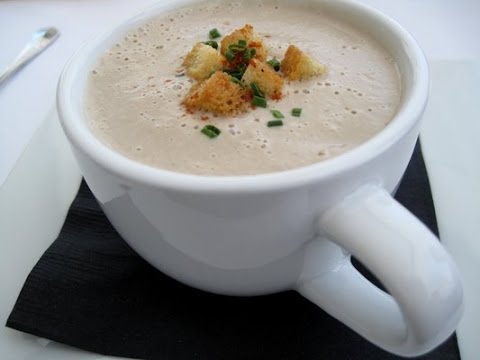
Mushroom Cappuccino

hqdefault.jpg (480×360)

Ingredients

1 lb chopped assorted mushrooms
5 Tbsp onion
1 clove garlic, chopped
2 oz clarified butter
2 pints chicken or vegetable stock
1 pint cream
few drops truffle oil
1 tsp parsley, chopped
salt, to taste
ground white pepper, to taste
springs of thyme, to garnish

Method
Saute onions and garlic in butter, add assorted mushrooms.
Add stock and simmer.  Season with salt & pepper.
When mushrooms are cooked, blend in a blender and sieve through a chinois.
Return the puree to the pan and add cream and a few drops of truffle oil.
Adjust the seasoning and consistency.
Serve hot.

Serves Four

Who says cooking has to be complicated to taste good?

Thursday, March 17, 2016

Sprint Cooking Class

     I've been to my share of cooking classes.  I've learned how to make tortellini in Florence and chicken cacciatore in Tuscany.  I've sliced and diced with the best of them home and abroad.  The format is pretty much the same in each case.  Most classes are hands on and run anywhere from a couple hours to an entire day.  But on the high seas the class offered by the cruise line was not a marathon of methodology but rather a high speed sprint medley.


     It began with a brief introduction from an English interpreter, in this case from England itself, a Londoner, with a very pronounced British accent.  With an economy of words he described what each of the chefs on board was creating as we looked on.  We met in the kitchen/dining area of the Pinnacle Grille, a high end additional cost steakhouse restaurant located on the ship's top deck.  In rapid fire succession we watched as a four course meal was prepared in under an hour and were given small tasting samples of each item.  It was like a listening to a 45 rpm record being played at 78.


     But I guess in this day and age with the 30 second commercial and the 2 second sound bite that is the pace of life we've become accustomed to.  And if Rachel Rae can serve an entire meal on TV in under half an hour, I guess a cruise ship can teach us how to high speed cook, too.


Wednesday, March 16, 2016

Mythical Towns

     After a "fun day at sea"  (those are the cruise line's words, not mine) we arrived at our first port of call in the Dominican Republic, Amber Cove.  But you won't find it on any map of the country.  That's because it doesn't exist.  No one lives there.  In reality the closest town is Puerto Plata, about a 20 minute ride away.


     Amber Cove only appeared last October, the work of the cruise line to create a place for the ship to dock and for the passengers to be relieved of their currency at any number of gift shops, restaurants, beach fronts and bars.  Amber Cove, like all the other ports,  looks very upscale, clean and accommodating.  But realistically it is a closed community, walled off by a fence that surrounds the entire property.  The only way in or out is through a guarded gate. Entrance and egress is permissible only by producing a ship's card and a photo ID. And when the ship leaves port so do all the people who work there.


     We managed to negotiate a taxi ride into town for a look-see around and found a very different scene and way of life.  Our driver in broken English told us he would take us to see where the poor people and the rich people live, to see the beach and to walk around Parque Independencia next to the Iglesia Catolica, and of course to take a ride past the rum factory.


     After the personal guided tour I had some time on my hands and since it was just about noon I decided to look over the menu at the Coco Cana grill back in Amber Cove.  The Spanish speaking staff were all very friendly, and very young.  I ordered the coconut shrimp with fries and struck up a conversation with several of the folks working there.  The food was good and so was the conviviality.  I must admit, however, that their English was better than my Spanish.  I learned from them that the pay was marginal and the hours irregular.  But they had a job.  Many in Puerto Plata could not say the same.


Tuesday, March 15, 2016

Around the World, Down the Street

     My most recent culinary research took me to the eastern Caribbean.  I had planned to study the cuisine of several islands there and spent a week traveling and tasting the food of the Dominican Republic, St. Thomas, Puerto Rico, and Grand Turk.  It was all a part of a late winter respite from the chilly homeland.  With my culinary traveling associate I happily booked passage on one of the many cruise ships that routinely ply the warm azure waters of the West Indies, where Columbus accidentally landed back in 1492.

     As is our custom we always arrive a day ahead of our sailing date to make sure we don't miss the boat.  That provided me with an opportunity to do some surveillance near the hotel where we would spend the evening.  Looking for a place to have dinner I was surprised to find 3 very different cuisines within the space of 2 blocks on the same road.  Bryson's Irish Pub looked to be a local watering hole and I expected to see things like corned beef and cabbage on the menu with St. Patty's Day just around the corner.  But with a blending of cultures instead I lunched on conch fritters.  


     Filled with incredulity I made my way to the next block and looked with skepticism at a storefront pizza shop.  The sign painted on the front window boldly announced, "A Little Bit of Philly" so I went in to see for myself it it was legit or just a wanna be.  I quizzed the owner about some local landmarks that only a Philadelphia native would be acquainted with.  Sure enough, he was the real deal!  He's an ex-pat who brought with him the best of Philly's style of pizza and cheesesteak and provided me with a free sample of each, just to prove his point.  It was just like being home!  We talked Phillies, Eagles, the Vet, Wing Bowl, and throwing snowballs at Santa, much to the amazement of the Florida patrons listening in. And his parents still live in neighboring East Norriton.

     But the real find was a small Peruvian restaurant just two doors down from the Philly experience.  Comer es translates into English as "eating is" and was the dining destination for our evening meal.  It certainly wasn't anything fancy, just a few chairs and tables and a small counter.  But the menu was extensive!  Three pages of choices that offered chicken, fish and red meat options.  It was overwhelming!  So we asked our bi-lingual waitress if she would have the chef/owner choose for us two entrees: one chicken and one seafood.  We figured that our meal would taste better if it was a favorite of the one preparing it.  Soon our meals came to the table along with the smiling senora who had lovingly cooked it just for us.  


Our waitress earned her pay that night as she also acted as translator since the chef spoke not a word of English.  The meals were amazing as was the medley of authentic desserts that followed.  


     We weren't exactly sure what we were enjoying and it was both a challenge and a treat to identify what we were tasting.  I'm guessing it was just as authentic to Lima as a cheesesteak is in Philly.