Tuesday, February 7, 2012

Fruits & Vegetables

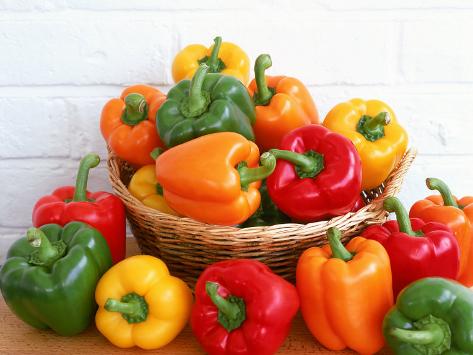
     Have you been thinking about more "fruits" that we consider to be vegetables after yesterday's discussion of the tomato as a fruit?  Consider some other members of the nightshade family like the capsicums, the peppers that we enjoy in a variety of ways.  They, too begin as a tender blossom and then mature into what Columbus mistakenly termed peppers.  In fact they have no relation to the black pepper of India and the Orient.  They are essentially hollow berries with a thin crisp wall and are the defining element of numerous cuisines from Mexico, Spain, & Hungary to many Asian countries, especially Korea.  Some are perhaps best known for their spicy heat which can trigger the pain and heat receptors in our mouths that many have come to love in a perverse way.
    
      They come in all sorts of shapes and colors and are rich in lutein which benefits vision.  Peppers have other health benefits, too, including increasing our metabolic rate so that we burn more calories.  They also cause us to feel less hungry, more satiated, thus encouraging us to eat less.  So by consuming hot peppers we burn more of the fewer calories that we do eat.
     It was chemist Professor Wilbur Scoville who developed the pungency (heat) scale of peppers back in 1912.  He rated peppers according to what we now know as the Scoville Unit with green bell peppers at 0 on one end of the scale and the fiery Naga Jolokia Ghost Pepper at the other extreme at over 1,000,000.  The familiar Habanero, or Scotch Bonnet, coming in at somewhere in between with a score of 80,000-150,000.
     Here is a recipe I enjoy that showcases the bell pepper's versatility:

ROASTED BELL PEPPERS

1 Tbsp EVOO                                               1/4 lb baby spinach
1 red onion, chopped                                 1 1/2 tsp ground cinnamon
1/2 lb sliced mushrooms                          3/4 tsp ground cumin
1 cup chopped carrots                               1 cup uncooked quinoa, rinsed and cooked
7 bell peppers                                              salt & pepper to taste
1/2 cup chopped parsley                           1/2 cup roasted, salted cashews

     Heat oil in a large skillet over medium high heat.  Add onion and cook, stirring occasionally until transparent, 8 to 10 minutes.  Add mushrooms and cook until softened, 4 to 5 minutes more.  Add carrots and 1 of the peppers, chopped.  Cook until just softened, then add parsley and spinach (in batches if necessary).  Let spinach wilt and then stir in cinnamon, cumin and cooked quinoa and toss gently to combine.  Add salt, pepper and cashews and cook 1 to 2 minutes more.  Set aside to let filling cool until just warm.
     Meanwhile, preheat oven to 350F.  Grease a 9"x13" baking pan with oil then set aside.  Cut the tops off of the remaining 6 peppers and core and seed them.
     Divide the quinoa mixture evenly among the peppers, gently packing it down and making sure to fully fill each pepper.  Top each with its reserved top then arrange them upright in prepared pan.  If necessary trim the bottom of the peppers so that they stand straight.  Cover snugly with foil and bake until pepper are tender and juicy and filling is hot throughout, about 1 hour.  Transfer to plates and serve.

     Interested in a great recipe for our previously mentioned fruit, the tomato?  Well just click on this link for a way to prepare those garden beauties this summer.

Monday, February 6, 2012

Fruit or Vegetable?

     Remember growing up and being told to "eat your vegetables!"?  But what if they aren't really vegetables after all, does that decree still stand?  As a Christmas present I received a book entitled On Food and Cooking: The Science and Lore of the Kitchen."  It is a fascinating compendium of knowledge that I have just begun to read.  It's one of those kind of books that you don't have to read from the beginning but can just open it up to any random section and be amazed at what you learn.  I did just that last week and happened upon a section that detailed "fruits used as vegetables."
     So what differentiates a fruit from a vegetable?  Well I suppose that a vegetable for the most part grows in the ground and is what it is from the start, like a carrot or potato.  But a fruit first becomes a blossom and then gradually matures into something else, like an apple, peach or pear.  But think for a moment of other "vegetables" as we refer to them, that also start out as a blooming plant.
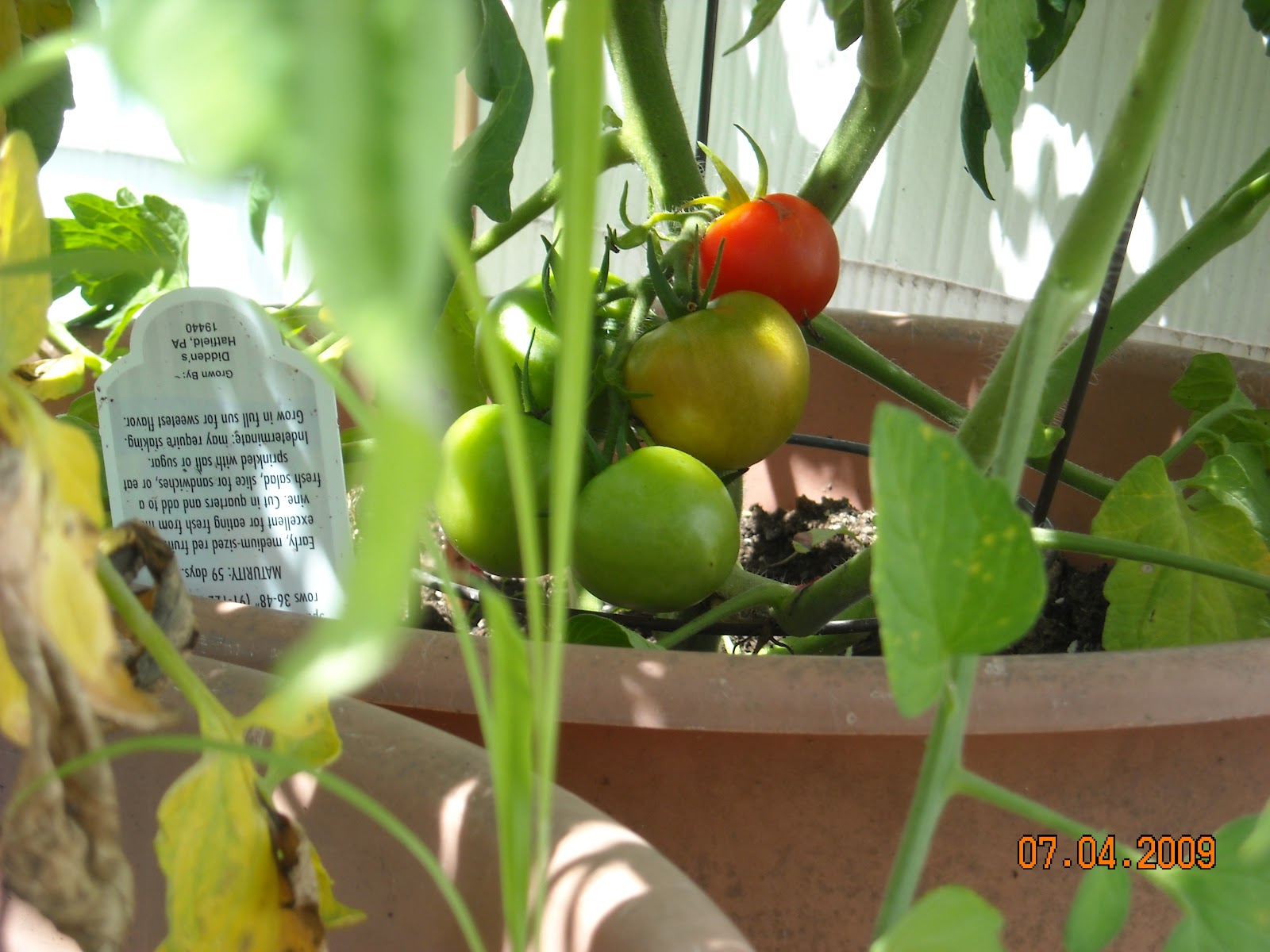
     Harold McGee, the book's author begins his discussion of the fruit/vegetable dichotomy with a summery of the nightshade family.  That would include tomatoes, capsicums & eggplant.  All of which begin with a blossom.  By the way, that plant family also includes tobacco and the deadly nightshade.  But today let's concentrate on the concept that the tomato is really a fruit and not a vegetable.
 

     Tomatoes started out as a small bitter berry on bushes in the west coast deserts of South America.  They were eventually domesticated in Mexico.  In fact, the word tomato comes to us from the Aztec word  tomatl  meaning "plump fruit."  It is the second most popular fruit in the U.S.   It is rich in Vitamin C and full of beneficial lycopene.  While tomato leaves have long been considered toxic, as was the tomato itself in Europe, the leaf is actually healthful in that it aids in ridding the body of cholesterol.  So it is actually a good thing to freshen up the flavor of tomato sauces with a leaf or two.
     As mentioned, tomatoes originated in a warm climate and so should always be stored at room temperature, never in the refrigerator.  When subjected to the cold tomatoes become bland and tasteless.  And we all know that home grown vine ripened tomatoes taste best.  That's because when they are permitted to ripen naturally they accumulate more sugar, acid, and aroma.  The tomatoes we purchase at the market, especially at this time of the year are anything but that.  They are picked and shipped while still green and are then artificially stimulated with ethylene gas to force them to redden.  Their taste more closely resembles the cardboard container they are shipped in.
     So now you can impress all your friends and acquaintances with the true identity of the tomato.  I leave you for today with this old culinary adage:  Knowledge is knowing that a tomato is a fruit.  Wisdom is knowing not to put them into a fruit salad.


Sunday, February 5, 2012

This Week in Food

     Even though Punxutawney Phil purportedly saw his shadow on Groundhog Day this past week the forecast for the coming week is calling for above average temperatures.  So I am planning to cook several meals on the gas grill sitting on my porch.  Now that it is in working order once again (it's a long story) I hope to fire it up and prepare some classic meals on the grill.  Here's what I have in mind after the Super Bowl:

Sunday
Super Bowl Grazing Event
Buffalo Chicken Balls
nachos and homemade salsa
grapes & celery sticks
dips

Monday
Grilled Flat Iron Steak 
Twice Baked Potatoes
Creamed Spinach

Tuesday
Grilled Lamb Burgers
Sweet Potato Fries
Roasted Green Beans

Wednesday
Grilled Kielbasa in Red Sauce
Garlic Linguine
Sliced Apples

Thursday
Chicken & Wild Rice
Steamed Broccoli


     Last week I mentioned the inclusion of squirrel in the Brunswick Stew recipe.  Today I received an e-mail from Cousin Skip in South Carolina touting the virtues of al rodente.  Click on the link to read more.

Saturday, February 4, 2012

Week in Review

     Last week's menu worked out well for our busy schedule.  Each night I was able to have a hearty, healthy meal on the table with little time or effort.  Permit me to highlight the Miner's Spiced Kettle of Beef recipe for you.  It's a variation on the beef stew theme and provides a warming kick on a chilly Winter's day.

Miner's Spiced Kettle of Beef

2 lbs boneless beef chuck, cubed                                3 cups canned tomatoes, drained
1/2 cup flour                                                                   2 cups diced carrots
1 Tbsp salt                                                                       1 cup diced celery
1/2 tsp pepper                                                                3 cups diced potatoes
1/2 tsp smoky paprika                                                  1 cup frozen peas, thawed
2 Tbsp vegetable oil                                                      1 tsp sugar
1 cup chopped onion                                                     2 tsp salt
6 cups water                                                                   1/4 tsp pepper
Garni: 1 clove & 1 tsp pickling spice in cloth           3 Tbsp cornstarch with 1/4 cup cold
                                                                                            water

     Dredge beef cubes in mixture of flour, salt, pepper and paprika.  Brown in oil on all sides in a large heavy kettle.  Add onion and brown lightly.  Add water and garni.  Simmer, covered, for 30 minutes.  Add vegetables and seasonings.  Simmer uncovered 30 minutes or until potatoes are done.  Blend some of the hot gravy into the cornstarch mixture and stir into stew until thick.
Serves 8 to 10

     If you'd also like the recipe for the Greek Spiced Baked Shrimp just click on to the link.  It was great served over some rice on Tuesday evening.

     N.B.  If you checked in to Friday's post in the morning, please take another look.  I revised it later in the day and made a few corrections, as well as adding a link to an interesting video on making shoo fly pie!

Friday, February 3, 2012

Got a Wet Bottom?

     Perhaps the singular most item associated with the Pennsylvania Germans is Shoo Fly Pie.  But if you didn't grow up in Penn's Woods you probably aren't familiar with this unique kind of morning pie.  So what exactly is it?  Some have attempted to describe it as a sort of coffee cake with a gooey molasses bottom, which we locals call wet bottom as opposed to another variety without that layer, the dry bottom pie.
     It is similar to the 17th Century European Treacle Tart also made with molasses.  Treacle is the generic title for any syrup by-product of refined sugar cane.  The early German immigrants made shoo fly pie from the available provisions they brought with them: flour, brown sugar, molasses, lard, salt, and spices.  Frugal as they were and with limited fresh produce in their first season in the New World they devised a pie that utilized what they had on hand.  Another advantage was that it did not need refrigeration and withstood microbial infestation.  Simply put, it would not go bad.
     But why the strange name?  The most common and sensible theory is that shoo fly pies were originally baked in an outdoor kitchen and when set out on a table to cool, pools of the sweet and sticky molasses would occasionally appear on the surface of the pie, inevitably attracting flies which the women would shoo away.
     There is another interesting explanation that states that the shoo fly pie has a French origin, that the crumb topping resembled the surface of the cauliflower, which in French is "cheux-fleur."  Gradually it transliterated and was pronounced"shoofly." 
     I find it strange, however, that when I visited Paris and looked in the front window of the Patisseries there I saw many delightful and mouthwatering creations, but not one shoo fly pie!
     So how does one go about baking a shoo fly pie?  Watch the video on this link to find out.  For the exact recipe chust click on this link.  And never pass up the opportunity to enjoy some wet bottom shoo fly pie with your morning coffee!

Thursday, February 2, 2012

Let them eat cake!

     A few days ago I posted about the origins of funeral pie.  Well apparently it got the attention of Rev. David Luz, Executive Director of the Schwenkfelder Library and Heritage Center.  He responded with an e-mail reminding me that there is a food unique to the Schwenkfelders, called oddly enough, Schwenkfelder Cake.  He then kindly sent along the recipe.  As I read through it I noted that it is very labor intensive requiring an overnight commitment to preparing the dough for baking.  And it also has one ingredient that I know would please my daughter in St. Paul.  And that is the inclusion of mashed potatoes.  
      Here is the recipe that Rev. Luz passed along to me:

Schwenkfelder Saffron Cake

Step I - 6 pm
     1 cup mashed potatoes
     1/2 cup sugar
     1 pkg. yeast
     1/2 cup water in which potatoes have been cooked

At supper time make a sponge by dissolving yeast in 1/2 cup lukewarm potato water.  Add to mashed potatoes and sugar that have been mixed together.  Cover and let set in a warm place for 3 hours.

Step II - 9 pm
     1/4 cup hot water
     1/4 tsp saffron
     1 cup warm milk
     1/2 cup lard
     1 egg
     1 cup sugar
     1/2 tsp salt
     2 cups flour

After the sponge has set for 3 hours, pour hot water on saffron and let set a few minutes.  Meanwhile, soften the lard in warm milk.  Add it to the egg, beaten with the sugar and salt.  Slowly pour in the saffron water without using the saffron.  Add this and 2 cups of flour to the potato sponge and beat until smooth.  Cover and let rise overnight in a 75 degree temperature, free from draft.

Step III - next morning
    6 cups flour

In the morning add the 6 cups of flour and more if necessary to handle.  Knead until smooth.  Roll out dough into two sheet cakes 1/3" thick.  Place on cookie sheets and cover with a cloth to rise 1/2 hour.  Rub together the four ingredients listed below to make the crumbs.  When the cakes are risen, heat oven to 350 degrees.  Brush top of cake with cream or melted butter.  Cover cakes with crumbs and bake 20-25 minutes

Crumbs
     1 cup flour
     1 cup light brown sugar
     1/3 cup lard
     1 tsp cinnamon

Wednesday, February 1, 2012

Everything But the Oink

     After posting yesterday about the Pennsylvania Germans and their creation of funeral pie I got to thinking about some of the other tasteful contributions they have made to our kitchen table.  The list is considerable and I will spend the next few days highlighting some of my favorites.  Now having said that I will spare you the details of what goes into head cheese, sometimes referred to as souse.  But let's just say that the German immigrants were very frugal in their style of living and that carried over into their food production as well.
     Having a Pennsylvania Dutch mother at work daily in the kitchen as I grew up meant that I became familiar with that style of cooking from a very young age.  So it was not uncommon to see on my breakfast plate a golden brown slice of fried scrapple beside some shimmery scrambled eggs.  Yes scrapple is another regional food that was brought to the New World by people looking for religious tolerance and a better way of life.  But what exactly is it?  Some of the unappreciative in the culinary arts refer to it as pork mush, but that is a pejorative term for a protein rich food that is typically eaten as the first meal of the day, particularly in the cooler months.
     It is as it's name implies the scraps of meat from the hog that are left after the prime cuts like the hams, ribs, loin and belly are removed.  So all the left overs are then ground together and added to corn meal and spices and molded into a brick like shape to later be sliced and fried so that there is a firm crust on the outside and a creamy warm center.  It is often  topped with one of a variety of condiments such as ketchup or apple butter, another wonderful contribution from our German ancestors.  And as you might expect there are about as many recipes for the making of scrapple as there are German last names in the Schwenkfelder Church Genealogical Record.  Each one with a different and exact quantity of certain spices added  into the mixture.  It is also sold commercially by local producers such as Hatfield Quality Meats and Habbersetts and Leidy's.  But my favorite is the home made stuff that I purchase on my Friday forays to The Green Dragon in Ephrata.
     Sadly, I'm the only one in my household who enjoys this regional delight.  For some reason I cannot get either of my daughters or my wife to share my enthusiasm for a fortifying morning meal of a slice or two of scrapple.  But then again I can't stand even the smell of soft boiled eggs.