My quest to search for authentic Carolina cuisine has hit a major snag. Our group is taking advantage of off season rates for our rental property and that's a good thing. But it also means that many of the dining establishments have not yet opened for the tourist season which is still some weeks away. So for lunch I had my mouth drooling for some Carolina 'Que at a local place called appropriately "Sooey's" but to my chagrin it was closed. So was a nearby seafood restaurant where I had my heart set on enjoying a fried oyster sandwich. There was also a takeout fish market around the corner that looked interesting but it, too, had a CLOSED sign on the door. Ironically the only place open was a Philly Steak Sandwich shop that advertised itself as serving all their menu items on Amoroso rolls. (See my post from April 2 "A Philly Original"). The other option was a very generic Dairy Queen.
Our original plan was to go out for dinner on the town, but as we sadly learned the town was not yet open for business. We then reluctantly ordered out for pizza.
So my search for an authentic Carolina meal will continue...
Monday, April 30, 2012


Friday, April 27, 2012
On the Road Again
It's time for me to get back on the road again, as Willie Nelson would croon. I'm ready for another culinary tour to visit yet another part of our wonderful country. This time I'm headed down the east coast to discover what makes Carolina 'Que so special. It's going to be a week by the sea along North Carolina's Outer Banks.
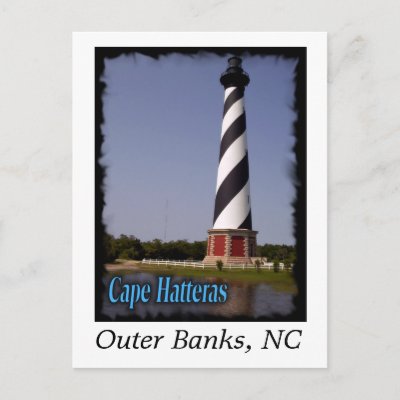
So in addition to sampling their vinegar based barbeque I will also be able to enjoy some fresh fish and seafood. I have some recipes that I plan to take along but I am also going to be on the lookout for new and different ways to prepare the fruit of the sea.
Be sure to check Vinny's web site this coming week for updates on my next culinary adventure!!!
So in addition to sampling their vinegar based barbeque I will also be able to enjoy some fresh fish and seafood. I have some recipes that I plan to take along but I am also going to be on the lookout for new and different ways to prepare the fruit of the sea.
Be sure to check Vinny's web site this coming week for updates on my next culinary adventure!!!
Thursday, April 26, 2012
A Fruit by Any Other Name
What do the Chinese Gooseberry, Macaque Peach and theYang-tao have in common? It may surprise you to know that they are all names for the fruit that we have come to know as the Kiwi, an egg sized berry with a hairy brown peel that contains a green flesh and a central white pulp surrounded by small black seeds.

As you might suspect, the Kiwi fruit was named after the flightless bird of New Zealand, but it did not originate there. It was cultivated over 700 years ago in China from the vine of the Actinidia Deliciosa. It wasn't until the beginning of the 20th Century that seeds of this edible fruit were carried by Christian missionaries to New Zealand and planted there, and given it's present moniker. The Kiwi fruit then traveled to the United States around 1960 and was first marketed commercially a decade later. Currently it is grown in Italy, South Africa, Chile, New Zealand, and California.
It has a sweet taste that is a combination of the flavors of bananas, pineapples and strawberries. When harvested the Kiwi fruit contains a large amount of starch which slowly converts to sweet sugars when stored at the freezing point. And they are very healthy, too, with all the potassium of a banana but with only half the calories. They have twice the Vitamin C of an orange and are also known to contain Vitamins A & E as well as beta carotene, flavonoids and several minerals. In studies the Kiwi fruit has been proven to reduce asthmatic symptoms in children and being rich in fiber, lowers the risk of contracting colon cancer. They support the body's immune system and are powerful anti-oxidants.
Even though the fuzzy skin is completely edible (as are the seeds) most people choose to peel them. Some use a traditional vegetable peeler while others have found that by cutting off a thin sliver from each end they can then slip a small spoon in between the skin and the flesh and carefully rotate the spoon's edge around the fruit which loosens the skin that can then be removed easily.
Their growing season is soon to come to an end so hurry out and stock up and give this new and popular fruit a taste!
Wednesday, April 25, 2012
Pilfering the Lunch Pail
When I was a little kid I loved to raid my Father's lunch box. Every day he carried it to work as he went off to build something special in our community. He was a master carpenter and many of his works still stand today as a testimony to his skill. His lunch would vary from day to day but one constant was the cookies he always had for his dessert. If I didn't find them first he would enjoy 2 Toll House cookies each day. They were something I eagerly sought in that old black lunch pail.
But what's the story behind those chocolate chip cookies and how did they get that name? Like so many other culinary creations, they came about quite by accident. The year was 1930 and Ruth Wakefield and her husband, Kenneth, decided to purchase an old 18th Century house in Whitman, Massachusetts with the hope of establishing a business there. According to Ann Treistman, author of Who Put the {DEVIL} in Deviled Eggs?, the structure "once served as a coaching stop for weary travelers looking to change horses and eat a warm meal." It was because of that history that the Wakefield's named the place The Toll House Inn.
Mrs. Wakefield was an accomplished cook and a graduate of the Framingham State Normal School Department of Household Arts and a former dietitian. The meals and desserts she prepared at the inn were well known throughout the area. Then one day she was preparing to bake some butter drop cookies flavored with baker's chocolate, but to her dismay discovered that she had run out of that ingredient. So she substituted bits of a Nestle's chocolate bar and added them into the dough. But unlike the baker's chocolate, the Nestle's chunks did not melt into the batter while in the oven. They only softened slightly as the batter baked around them.
And so the chocolate chip cookie was born. They quickly became known to New Englanders as Toll House Cookies. (Variants of this account abound. You can compare stories and get the recipe by clicking on the highlighted phrase above.)

But what's the story behind those chocolate chip cookies and how did they get that name? Like so many other culinary creations, they came about quite by accident. The year was 1930 and Ruth Wakefield and her husband, Kenneth, decided to purchase an old 18th Century house in Whitman, Massachusetts with the hope of establishing a business there. According to Ann Treistman, author of Who Put the {DEVIL} in Deviled Eggs?, the structure "once served as a coaching stop for weary travelers looking to change horses and eat a warm meal." It was because of that history that the Wakefield's named the place The Toll House Inn.
Mrs. Wakefield was an accomplished cook and a graduate of the Framingham State Normal School Department of Household Arts and a former dietitian. The meals and desserts she prepared at the inn were well known throughout the area. Then one day she was preparing to bake some butter drop cookies flavored with baker's chocolate, but to her dismay discovered that she had run out of that ingredient. So she substituted bits of a Nestle's chocolate bar and added them into the dough. But unlike the baker's chocolate, the Nestle's chunks did not melt into the batter while in the oven. They only softened slightly as the batter baked around them.
And so the chocolate chip cookie was born. They quickly became known to New Englanders as Toll House Cookies. (Variants of this account abound. You can compare stories and get the recipe by clicking on the highlighted phrase above.)
Eventually Mrs. Wakefield sold her Toll House Cookie recipe to the Nestle Company in exchange for a lifetime supply of chocolate chips. To this very day every bag of Nestle chocolate chips sold in North America has the original recipe (or a variation of it) printed on the back.
I'm going to leave you with a quote from one of the most famous cookie affectionados of all time:
Sometimes me think, "What is friend?"
And then me think, "Friend is what last chocolate chip cookie is for."
Tuesday, April 24, 2012
Amazing Mayo
Yesterday I posted about the origin of one of the most common condiments in the world, mayonnaise. Today I will tell you about some of the non-culinary uses of the celebrated sauce of the Battle of Port Mahon.
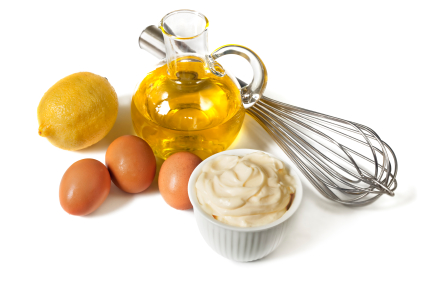
According to Jennifer Conrad who writes in the March 2012 issue of Rachael Ray Magazine, there are many amazing uses for mayo other than putting it in a sandwich. Here is her list:
1. POLISH THE PATIO-To treat water stains on wood, use a soft cloth to gently work a little mayo into damaged tables and chairs. According to Allen Rathey of housekeepingchannel.com, "Mayo replenishes the moisture in the finish and gives it shine and protection."
2. SOOTHE DRY SKIN-No matter how much you moisturize, dry skin and winter go hand in hand. One cure: cold mayo. Ingredients like oil and vinegar hydrate and prevent skin from flaking...Just apply a dollop to dry skin areas, let sit for 10 minutes, then wipe away with a damp cloth.
3. UNSTICK PRICE TAGS-Battling with a stubborn sale sticker? Add a touch of mayo straight out of the jar to loosen the glue, let sit for five minutes, then peel away. It also works to remove bumper stickers.
4. GET SILKY STRANDS- The condiment is super nutritious for your hair, thanks to its key ingredients. Egg yolk, which contains lecithin, encourages hair growth; vinegar exfoliates the scalp; and oil conditions the hair. Generously coat your locks in room temperature mayo, toss on a shower cap and rinse thoroughly after 30 minutes.
5. CLEAN A BURST BUBBLE-Dislodge a misplaced hunk of gum with a chaser of the deli classic, whether it's stuck in your little one's hair, on the wall or under your dining room table. Mayo contains natural emulsifiers that may help soften the sticky gum.
6. GET HOUSEPLANTS GLOSSY-It's a florist's best-kept secret: Rub a teensy bit of mayonnaise onto each leaf with a paper towel; the oils will make your potted plants look extra vibrant, shiny and healthy.
7. SALVAGE YOUR SILVER-Restore luster to that old college football trophy by giving it a quick once-over with some mayo, then buffing to a high shine. The mild acid from the lemon and vinegar will help tackle tarnish. (But test in an inconspicuous place first, just to be safe.)
8. INDULGE YOUR DIGITS-Would you believe that the best start for a DIY manicure is a dip in a bowl of mayo? Before applying polish, rest your fingers in a few tablespoons of mayonnaise for several minutes, then rinse. It strengthens nails and conditions raggedy cuticles.
9. PERFECT PAINT JOB-Unless you're a professional, at-home painting projects can get messy. An easy way to clean up any color-gone-rogue: Slick a touch of mayo onto dried drips (on doorknobs, light switches and other hard surfaces), then scrape off. A slather of the condiment will also get smudges off your skin-plus, it's less harsh than using paint thinner.
According to Jennifer Conrad who writes in the March 2012 issue of Rachael Ray Magazine, there are many amazing uses for mayo other than putting it in a sandwich. Here is her list:
1. POLISH THE PATIO-To treat water stains on wood, use a soft cloth to gently work a little mayo into damaged tables and chairs. According to Allen Rathey of housekeepingchannel.com, "Mayo replenishes the moisture in the finish and gives it shine and protection."
2. SOOTHE DRY SKIN-No matter how much you moisturize, dry skin and winter go hand in hand. One cure: cold mayo. Ingredients like oil and vinegar hydrate and prevent skin from flaking...Just apply a dollop to dry skin areas, let sit for 10 minutes, then wipe away with a damp cloth.
3. UNSTICK PRICE TAGS-Battling with a stubborn sale sticker? Add a touch of mayo straight out of the jar to loosen the glue, let sit for five minutes, then peel away. It also works to remove bumper stickers.
4. GET SILKY STRANDS- The condiment is super nutritious for your hair, thanks to its key ingredients. Egg yolk, which contains lecithin, encourages hair growth; vinegar exfoliates the scalp; and oil conditions the hair. Generously coat your locks in room temperature mayo, toss on a shower cap and rinse thoroughly after 30 minutes.
5. CLEAN A BURST BUBBLE-Dislodge a misplaced hunk of gum with a chaser of the deli classic, whether it's stuck in your little one's hair, on the wall or under your dining room table. Mayo contains natural emulsifiers that may help soften the sticky gum.
6. GET HOUSEPLANTS GLOSSY-It's a florist's best-kept secret: Rub a teensy bit of mayonnaise onto each leaf with a paper towel; the oils will make your potted plants look extra vibrant, shiny and healthy.
7. SALVAGE YOUR SILVER-Restore luster to that old college football trophy by giving it a quick once-over with some mayo, then buffing to a high shine. The mild acid from the lemon and vinegar will help tackle tarnish. (But test in an inconspicuous place first, just to be safe.)
8. INDULGE YOUR DIGITS-Would you believe that the best start for a DIY manicure is a dip in a bowl of mayo? Before applying polish, rest your fingers in a few tablespoons of mayonnaise for several minutes, then rinse. It strengthens nails and conditions raggedy cuticles.
9. PERFECT PAINT JOB-Unless you're a professional, at-home painting projects can get messy. An easy way to clean up any color-gone-rogue: Slick a touch of mayo onto dried drips (on doorknobs, light switches and other hard surfaces), then scrape off. A slather of the condiment will also get smudges off your skin-plus, it's less harsh than using paint thinner.
Monday, April 23, 2012
The Battle of Port Mahon
 Last Thursday, April 19th we celebrated the 256th anniversary of the French victory over the British at the Battle of Port Mahon. You missed it you say? What a pity! Because as a result of that battle we all enjoy something that was created to celebrate that decisive victory.
Mahon is the capital of Minorca, the eastern most of the Balearic Islands in the Mediterranean Sea. The battle fought there was one of many between the British and the French during the Seven Years' War. To read about the battle in more detail please click on the highlighted red phrase above. The French forces led by the infamous Duke of Richelieu sent the British packing. Then to celebrate, Duc de Richelieu ordered his master chef to prepare a banquet in his honor. So the chef went all out and put together a meal like none other. But unfortunately he was hindered by limited supplies. He had intended to create a wonderful French sauce by whipping together cream and egg yolks, but sadly realized he had no cream available. So in an act of creativity (or desperation) he substituted olive oil for the cream and Voila! a new culinary creation was born. In honor of the victory the chef named his new sauce after the site of the battle, calling it Mahonnaise.
Mayonnaise is still made by combining olive oil and egg yolks, blending in lemon juice and/or vinegar as well. The eggs bind the ingredients together into an emulsion, a mixture of two liquids that normally cannot be combined. Emulsification is accomplished by slowly adding one ingredient into another while rapidly mixing the two. Technically, emulsions are colloids, that is, heterogeneous mixtures composed of tiny particles of one liquid suspended in another immersible material.
That's probably TMI for most of you. But suffice it to know that with patience and a strong fore arm you can create your own version of the sauce that celebrates the Battle of Port Mahon. For your own recipe, click on to this link provided by The Food Network and Alton Brown.

Friday, April 20, 2012
Discovering America in Columbus
It was a day trip with a buddy that took me to Columbus, NJ and the Farmers' Market there. It is quite an operation that runs every week of the year from Thursday through Sunday. Here is what we saw as we pulled in the driveway to their massive parking lot:


It was interesting to see how many people had a traditional breakfast while others were more adventuresome and chowed down on "Que" for their first meal of the day. And speaking of people, Bob warned me that it would be a different crowd than what we were used to at the Green Dragon. And, boy was he correct on that one! The Columbus Farmers' Market made the Green Dragon look like Saks Fifth Avenue. And the kinds of booths were different as well. There were the typical food booths selling everything from pineapple upside down cakes, to the ever present pizza and burger joints. But there were also folks grilling satay sticks of beef and a booth with some strange looking Korean food for sale. And something not seen in peaceful Ephrata, Lancaster County was the booth under the series of canopies outside advertised by this sign:


It was quite an impressive collection of differing booths scattered throughout the location just outside of town. We began in the main building with breakfast in the Amish section:

It was interesting to see how many people had a traditional breakfast while others were more adventuresome and chowed down on "Que" for their first meal of the day. And speaking of people, Bob warned me that it would be a different crowd than what we were used to at the Green Dragon. And, boy was he correct on that one! The Columbus Farmers' Market made the Green Dragon look like Saks Fifth Avenue. And the kinds of booths were different as well. There were the typical food booths selling everything from pineapple upside down cakes, to the ever present pizza and burger joints. But there were also folks grilling satay sticks of beef and a booth with some strange looking Korean food for sale. And something not seen in peaceful Ephrata, Lancaster County was the booth under the series of canopies outside advertised by this sign:

And outside there were tables full of cheap bling, knock off pocket books, sunglasses and row after row of white athletic socks. Along the long aisles of cheap clothing were vendors with seedlings and various vegetable plants for sale direct from the nearby garden nurseries. There were some good deals if you had a discerning eye and a tight purse, coupled with a specific need. Then there was an open air section that had the appearance of the contents of your grand parent's attic. It was quite an eclectic collection of junk that the Thursday day traders hoped to unload on passers by. One vendor had an impressive display of military paraphernalia that only a certain clientele would appreciate:

After looking at all the items we realized we could live without we made our way to the produce market back out in the main parking lot. That was where we found the real bargains. Fruits and veggies were fresh and plentiful with bargain price tags. So we were able to declare the day's adventure a success as we stocked up on things like melons, peppers and potatoes:

So I found real America populated with real Americans at the Columbus Farmers' Market. I mean, where else could you be entertained by a decidedly off key gospel trio as you shopped?

Subscribe to:
Posts (Atom)